Double Materiality Analysis
EmpCo – Making sustainability claims credible
Double Materiality Analysis
Which sustainability issues are truly relevant to your organization – and where is the greatest need for action? The Double Materiality Analysis (DMA) systematically answers these questions based on stakeholder dialogues, impact assessments, and risk screenings. The DMA is a mandatory component of CSRD reporting and, for companies that are not (yet) required to report, it is the most robust tool for strategically prioritizing sustainability issues.
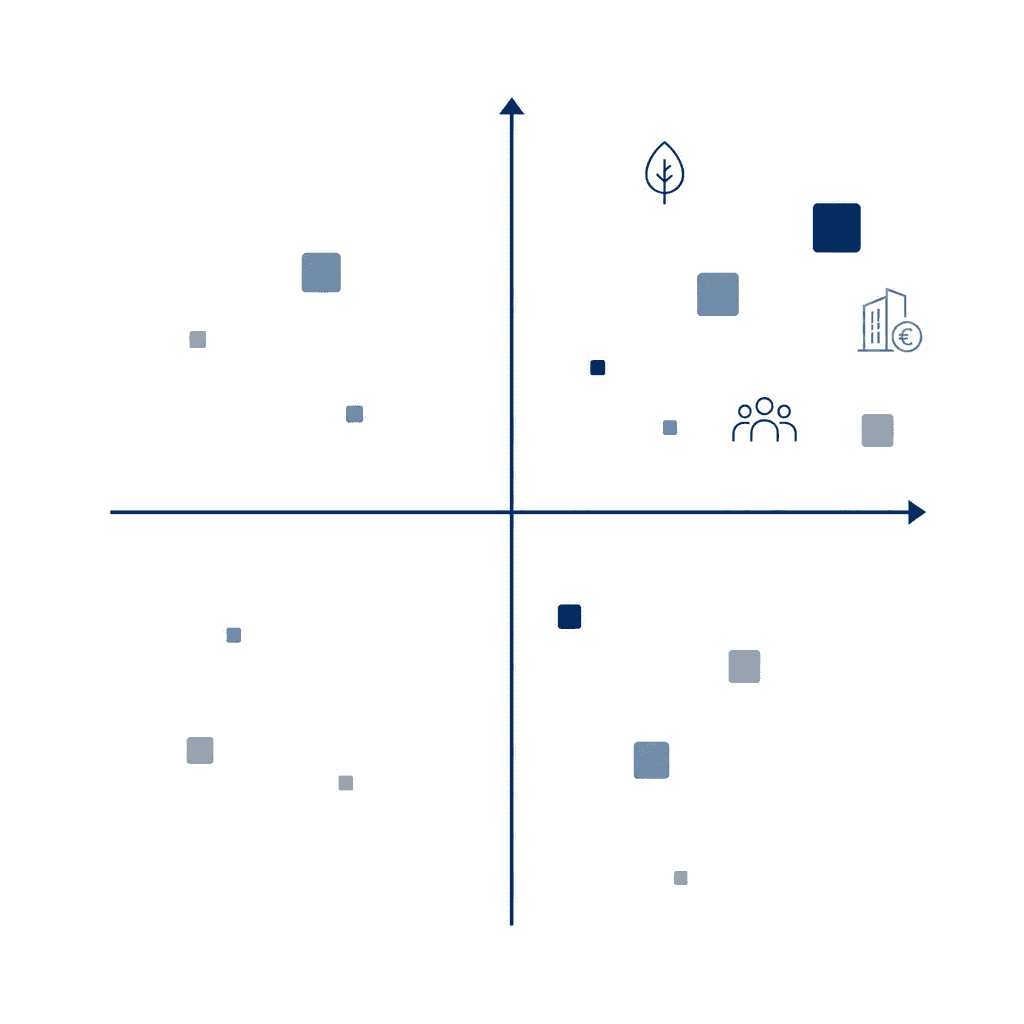
The result: a visual overview of your material issues. This provides a solid foundation for managing your company in a way that ensures its future viability while addressing both risks and requirements.
Good to know: The materiality analysis is eligible for funding as a consulting service through the BAFA program "Promotion of Management Consultancies for SMEs". We would be happy to assist you with the application process.

Our Approach
1. Stakeholder Dialogue
We identify and prioritize the stakeholder groups relevant to your company. For the key groups, expectations and associated risks are recorded in detail and prioritized according to the expected value of damages.
In the first step, we get an overview: How do you manage all sustainability aspects? Where does your organization stand in the areas of environment, economy, and social affairs? Which topics are already being addressed – and where are there blind spots? To do this, we record the current status along the ZNU fields of action, identify existing structures, processes, and data, and recognize what is missing for a potential certification.
Result: A documented stakeholder analysis, including prioritization, engagement formats, and analyzed feedback, to serve as the basis for subsequent evaluation.
Typical duration: One-day workshop.
2. Impact Screening (Inside-Out)
During the impact screening, we analyze the positive and negative effects of your business activities along the value chain. This is carried out separately for each individual pillar of sustainability in order to precisely identify areas for action.
In the first step, we gain an overview: How do you manage all sustainability aspects? Where does your organization stand in the environmental, economic, and social areas? Which topics are already being addressed – and where are there blind spots? To this end, we record the current state along the ZNU fields of action, identify existing structures, processes, and data, and recognize what is missing for a possible certification.
Result: A prioritized list of impacts (inside-out) with clear rationale for each topic and documented thresholds.
Typical duration: One-day workshop.
3. Risk Screening (Outside-In)
The risk screening focuses on identifying financial risks that can arise from external influences such as extreme weather events or market dynamics. This analysis helps to recognize transformational and physical risks at an early stage and to act accordingly.
In the first step, we gain an overview: How do you manage all sustainability aspects? Where does your organization stand in the environmental, economic, and social areas? Which topics are already being addressed – and where are there blind spots? To this end, we record the current state along the ZNU fields of action, identify existing structures, processes, and data, and recognize what is missing for a possible certification.
Result: Assessment of risks and opportunities (outside-in) taking existing risk management processes into account.
Typical duration: One-day workshop.
4. Consolidation of results
The materiality matrix represents the most important sustainability topics for your company. It provides a clear overview of the need for action in the short, medium, and long term and serves as a strategic tool for your sustainability activities.
Result: Materiality matrix of the top sustainability issues. These serve as the strategic basis for goals and actions.
Typical duration: Usually within 2 weeks.
Your contact persons
Do you want to know which sustainability topics are truly material for your company and which are not? Let's talk for 20 minutes about your initial situation, the effort involved, and a starting timeline.
Your contact persons
Do you want to know which sustainability topics are truly material for your company and which are not? Let's talk for 20 minutes about your initial situation, the effort involved, and a starting timeline.
Your Contact Persons
Do you want to know which sustainability topics are truly material for your company and which are not? Let's talk for 20 minutes about your initial situation, the effort involved, and a starting timeline.

